March 16, 2026

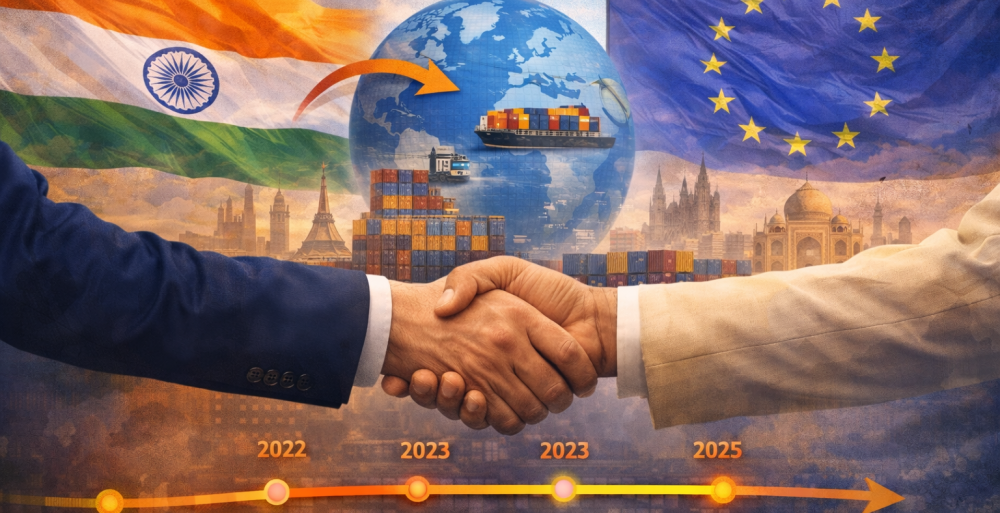
The signing of the India–European Union Free Trade Agreement marks a historic moment in global trade. It is India’s largest trade deal by economic scale and one of the most comprehensive agreements, the EU has signed with a developing economy.
But beyond the headline numbers, the real impact of this agreement lies in how tariffs are reduced — not simply that they are reduced.
For business leaders, sourcing heads, and supply-chain executives, this agreement is less about politics and more about timelines, sequencing, and strategic positioning.
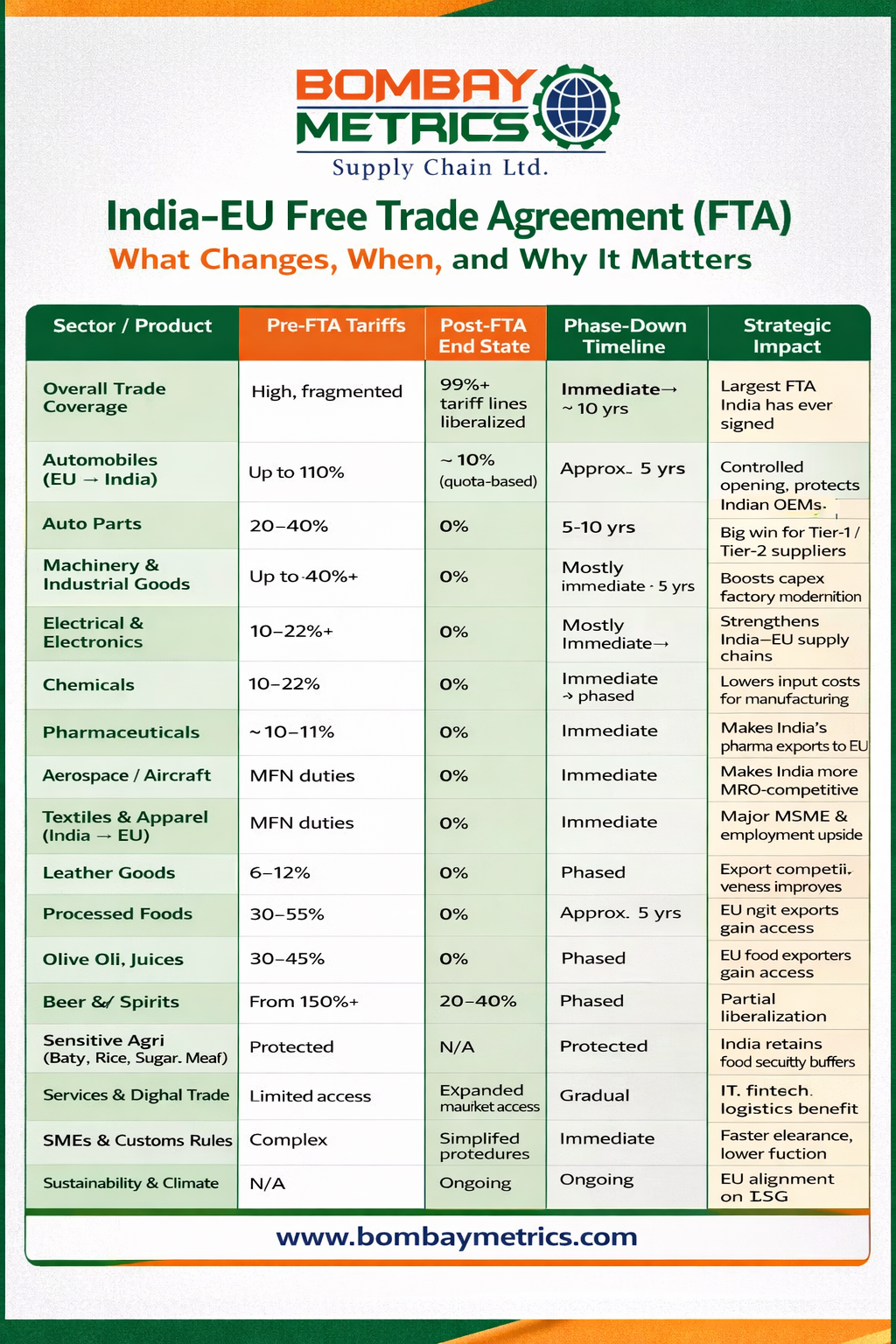
Unlike older FTAs that attempted abrupt tariff elimination, the India–EU FTA is deliberately structured around gradual liberalization. Over 99% of tariff lines will eventually be liberalized, but the journey spans immediate cuts, five-year ramps, and ten-year glide paths. Sensitive sectors remain protected to preserve domestic stability.
Industrial manufacturing, machinery, electrical equipment, chemicals, and capital goods see some of the fastest tariff elimination. Many tariff lines drop to zero either at entry into force or within a few years, directly improving India’s manufacturing competitiveness.
Textiles, apparel, and leather exports from India into the EU move rapidly to zero-duty access. This is a structural win for labor-intensive manufacturing, MSMEs, and India’s China-plus-one sourcing narrative.
Chemicals, pharmaceuticals, and aerospace products also see early liberalization. This strengthens India’s position in global pharma supply chains, aerospace MRO, and specialty manufacturing.
Where liberalization is slower is equally important. Automobiles follow a controlled, quota-based reduction path, protecting domestic OEMs while allowing gradual integration with European supply chains.
Sensitive agricultural sectors such as dairy, rice, sugar, and meat remain largely protected, signaling that trade liberalization will not override food security or rural stability.
From a supply-chain strategy perspective, this agreement should be viewed as a planning framework rather than a short-term event. Phased tariff reductions allow companies to re-sequence sourcing decisions, plan capex, shift product mixes, and align supplier development with tariff milestones.
The real winners will not be the companies that react first, but those that plan best. In a world of increasing tariff volatility and geopolitical fragmentation, the India–EU FTA restores predictability, structure, and long-term visibility for global trade.
This is not a day-one win agreement. It is a decade-long advantage for companies that understand the timeline and act accordingly.
Here is the summary of all the items affected by the trade deal and how they gradually come into effect