Compact Solutions for Components Hot Forging

Compact Solutions for Components Hot Forging

  • Hot forging represents one of the oldest and most effective metalworking processes where metals are shaped through compressive forces while heated to specific elevated temperatures.
  • This manufacturing technique transforms raw metal stock into precise, high-strength components by applying controlled pressure through hammers, presses, or specialized machinery while the material remains in a heated, malleable state.
  • Forging enhances the grain structure of the used materials, mostly metals, and alloys, hence enhancing the mechanical characteristics of the component and increasing its strength. Advanced hammers and presses are used to manipulate the material into a desired form.
  • At Bombay Metrics, we specialize in Hot forging solutions for automotive and industrial applications by combining advanced die design, precise temperature control, and global-quality standards.

Understanding Hot Forging Fundamentals

  • Material Flow Control: The heated metal flows around dies and tooling, filling complex geometries while maintaining structural integrity.
  • Grain Refinement: The forging process breaks down coarse grain structures and reforms them into finer, more uniform patterns.
  • Work Hardening Elimination: High temperatures prevent strain hardening, keeping the material workable throughout the process.
  • Consolidation: Internal voids and porosity are compressed and eliminated, creating dense, solid components.

Key Characteristics of Hot Forging

  • High Temperature Forming
    • Metals are heated above their recrystallization temperature (typically 750°C – 1250°C for steel, lower for aluminum).
    • This makes the metal more malleable and easier to deform.
  • Improved Mechanical Properties
    • Grain refinement and uniform microstructure enhance strength, toughness, and fatigue resistance.
    • Parts gain better impact resistance compared to casting or machining.
  • Enhanced Ductility
    • High temperature prevents cracking, enabling the production of complex shapes with thin sections and intricate details.
    • Refined grains make the material more flexible and less brittle, enabling complex shapes to be formed.
  • Better Surface Finish & Accuracy
    • Hot forging produces parts with smoother surfaces and reduced porosity.
    • Secondary machining requirements are minimized.

Factors Affecting Hot Forging

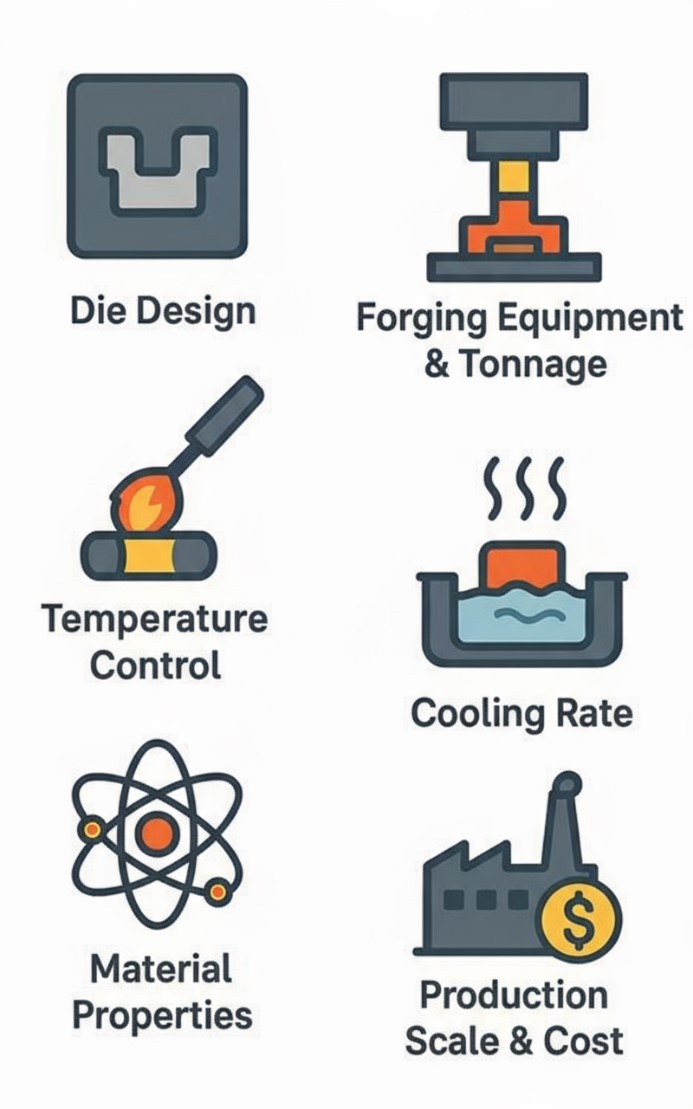
  • Die Design
  • Forging Equipment & Tonnage
  • Temperature Control
  • Cooling Rate
  • Material Properties
  • Production Scale & Cost

Hot Forging Process Complexity

  • Temperature Control
    • Metals must be heated above their recrystallization temperature to achieve proper ductility.
    • Precise heating is essential; overheating causes oxidation and grain growth, while underheating increases tool wear and defects.
  • Material Flow
    • Ensuring uniform material flow inside the die is critical.
    • Poor flow can lead to defects such as laps, cold shuts, or incomplete filling.
  • Die Design & Lubrication
    • Complex geometries require carefully designed dies with proper draft angles, fillets, and ribs.
    • Lubrication reduces friction, prevents sticking, and extends tool life.
  • Cooling & Heat Treatment
    • Post-forging cooling must be carefully controlled to avoid internal stresses or distortion.
    • Many forged parts undergo secondary heat treatments for improved hardness and strength.
  • Quality Control
    • High-precision inspection methods are required to detect surface defects, dimensional errors, or microstructural inconsistencies.

Hot Forging Temperature Ranges for Optimal Results

  • Temperature control serves as the critical factor determining forging success and final product quality.
  • Each metal type requires specific temperature ranges to achieve optimal formability while preventing defects like cracking, burning, or incomplete filling.
  • The temperature for forging steel can get up to 2,100 °F (1,150 °C)
  • Copper alloys up to 1,470 °F (800 °C)
  • Aluminum alloys up to 930 °F (500 °C)

Bombay Metrics Ideology in Forging Process

  • Material selection: Selecting the right material is one of the most critical decisions in the hot forging process. The choice directly impacts the strength, durability, machinability, and cost of the final component. At Bombay Metrics, we help customers choose the most suitable forging material by balancing performance requirements with cost-effectiveness.
  • Design complexity: Hot forging is better suited for complex shapes because the workpiece is more ductile and easier to work with. Our design engineering team provides the best solution with tight tolerances.
  • Production scale: Hot forging is highly versatile and can be adapted for Small, Medium, and Large-Scale Production.
  • Cost implications: The cost of hot forging depends on raw materials, tooling, and production volumes. Though it involves a higher upfront investment, it delivers long-term value through strength, durability, and reduced secondary processing needs.

Bombay Metrics Smart Decision & Strategy for Our Customers

  • We discover the fundamental principles that make hot forging work, including temperature control and material behavior under heat.
  • We cover essential equipment and tools needed — from furnaces to hammers — for customer operations.
  • We provide material selection strategies that ensure projects deliver the strength and quality your applications demand.
  • Our team works closely with clients during the DFM stage to balance performance, complexity, and cost, making hot forging an ideal choice for high-demand industries.

At Bombay Metrics

  • We combine optimized processes and strict quality control to deliver forging solutions that meet global standards.
  • Our commitment to innovation, efficiency, and customer-centric solutions ensures that every forged part not only meets design requirements but also delivers long-term performance.
  • Choosing Bombay Metrics means choosing a partner who understands the science, complexity, and value of hot forging—helping you achieve reliable, cost-effective, and sustainable manufacturing outcomes.
Unlocking the Strength of ADI Parts

Unlocking the Strength of ADI Parts

Austempered Ductile Iron (ADI) is a unique alloy that undergoes a specialized heat treatment process called austempering, which significantly enhances its strength, toughness, and abrasion resistance compared to other iron and steel parts. ADI is widely used across industries for its superior mechanical performance.

At Bombay Metrics, we leverage the Austempered Ductile Iron process to produce components that deliver exceptional strength, wear resistance, and cost efficiency. Our expertise extends from optimized material selection and process planning to every stage of casting and heat treatment — ensuring consistency and high performance.

Austempering Heat Treatment Cycle

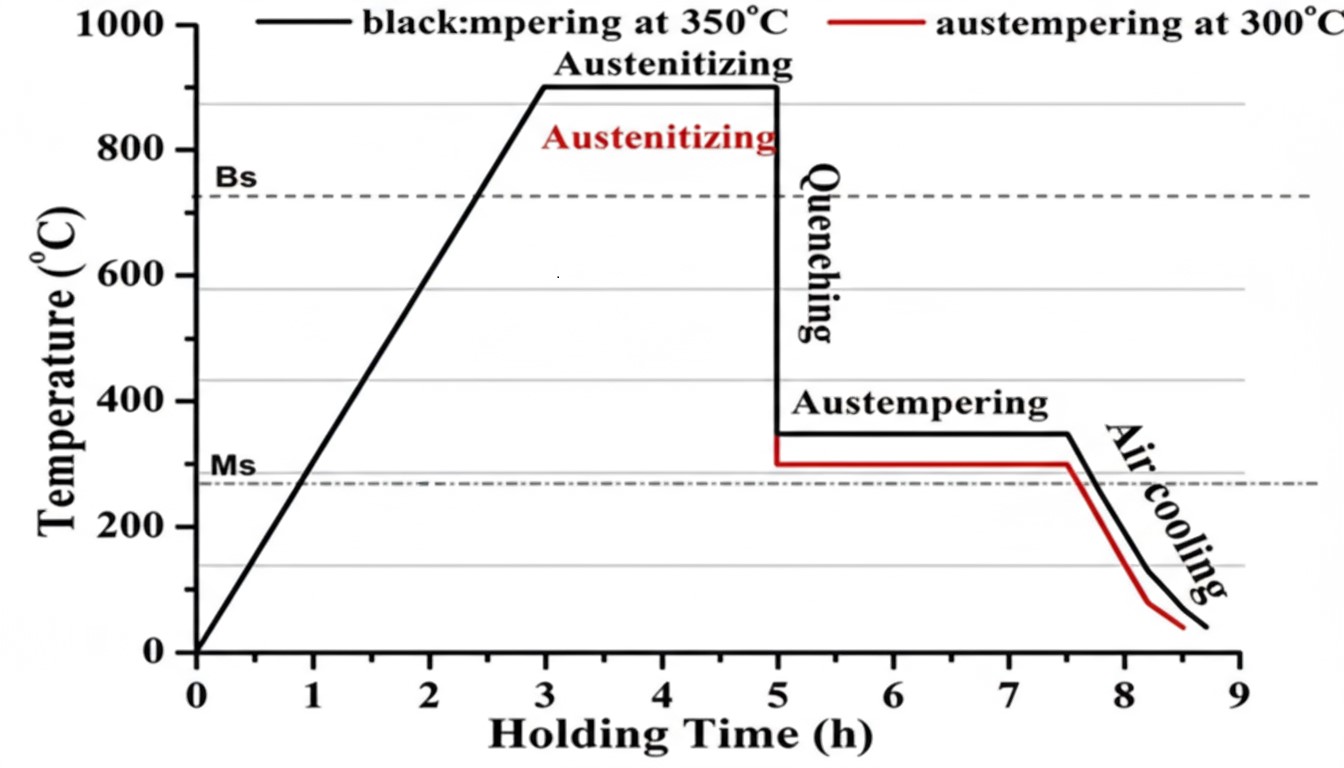
Austempering Heat Treatment Cycle – Bombay Metrics

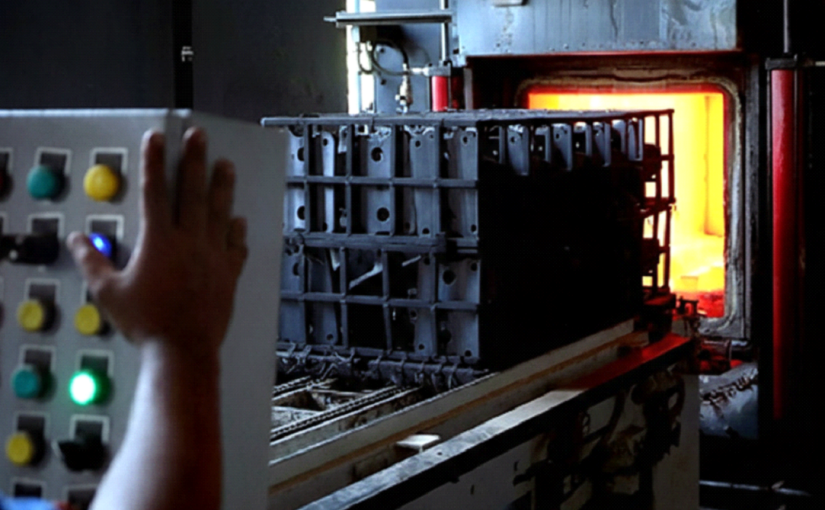
🔥 Austenitizing: The material is heated from room temperature to around 900°C, above the critical temperature. This converts the internal structure into austenite, a high-temperature phase essential for further heat treatment.

💧 Quenching: After reaching the austenitizing temperature, the steel is rapidly cooled to an intermediate temperature of 350°C–300°C. This step avoids direct martensite formation while maintaining structural integrity.

⏳🌡️ Austempering (Isothermal Holding): The steel is held at the chosen austempering temperature for several hours. During this period, austenite transforms into bainite, resulting in superior toughness, strength, and wear resistance.

🌬️ Air Cooling: Finally, the material is air-cooled to room temperature. The resulting microstructure — a combination of bainite and retained austenite — provides remarkable mechanical properties compared to conventional quenching and tempering.

Typical Industrial Applications of ADI

Industry Typical ADI Parts Key Benefits
⛏️ Mining Crusher liners, drill bits Impact absorption, abrasion resistance, extended liner life
🚗 Automotive Suspension arms, gears High strength-to-weight ratio, fuel efficiency, reliability
🌾 Agriculture Ploughshares, blades Toughness, resistance to abrasive soils
🚂 Railways Brake components, couplers Durability and reliability under high stress
⚙️ Machinery Chain links, sprockets Extended operational lifespan


Key Mechanical Properties of ADI

Property Value / Range Typical Applications
Tensile Strength 800 MPa – 1,600 MPa Automotive suspension arms, crankshafts, railway and construction equipment
Yield Strength 500 MPa – 1,400 MPa Defence, agricultural machinery, earthmoving, and heavy equipment
Hardness 250 – 500 BHN Mining, gear & transmission components, hydraulic systems
Ductility (Elongation) 1–10% depending on grade Automotive safety components, railway couplings, off-highway vehicles
Fatigue Strength 50% higher than conventional ductile iron Aerospace, automotive drivetrain, industrial machinery
Wear Resistance Transforms locally to martensite under stress Mining, quarrying, gear and power transmission, oil & gas
Strength-to-Weight Ratio Lighter than steel or aluminum with equal load capacity Electric vehicles (EV), aerospace, lightweight automotive parts


Advantages of ADI Parts

  • Twice the strength and yield of standard ductile iron.
  • Superior abrasion and wear resistance.
  • Excellent toughness and fatigue strength.
  • More cost-effective than traditional steel or aluminum alloys.
  • Retains impact resistance and ductility after heavy use.
  • Ideal for complex, near-net-shape castings that reduce machining needs.


Bombay Metrics’ Strategic Role in the ADI Process

  • Material Selection & Design Collaboration: We work closely with clients to analyze load-bearing, wear, and fatigue requirements. Based on this, we select suitable ductile iron grades and component geometries optimized for ADI processing.
  • Controlled Casting & Pre-Processing: Our foundry team maintains strict metallurgical standards to ensure clean, defect-free castings. Pre-processing steps are carried out to eliminate inclusions or irregularities that could impact heat treatment.
  • Post-Casting Operations: After austempering, components undergo secondary treatments, machining, and multi-stage inspections to meet international quality standards.
  • Rigorous Quality Control & Testing: We conduct metallurgical analysis, microstructure evaluation, hardness checks, tensile tests, and dimensional inspections at every stage to ensure consistent strength, fatigue resistance, and durability.
  • Continuous Improvement & Innovation: At Bombay Metrics, we continually refine the ADI process through R&D, process optimization, and material characterization — expanding its use across renewable energy, railways, and heavy machinery sectors.


“At Bombay Metrics, we are committed to delivering precision-engineered solutions using advanced processes like ADI. Our focus on quality, efficiency, and innovation ensures that we meet the evolving demands of global industries with excellence.”

India–U.S. Trade Deal: The Next Big Shift in Global Supply Chains

The India–U.S. trade negotiations are finally approaching a breakthrough. After months of back-and-forth, both sides have aligned on key tariff and technology issues — signaling that a “Phase 1” agreement may be signed in the coming weeks. 

This deal isn’t just about trade flows. It’s about realigning global supply chains in an era where resilience, regional diversification, and cost competitiveness define success. 

Our latest analysis shows clear momentum in industrial goods, semiconductors, and defense manufacturing, where tariff cuts and technology cooperation could reshape sourcing decisions across the Indo-Pacific. Sharp negotiation of using corn, soy from American Farmers for Ethanol production helps the administration it’s key farmers constituents. At the same time, energy collaboration — particularly around LNG and clean technology — could strengthen bilateral supply stability. 

Still, challenges remain. 

  • Agriculture use of Corn and Soy is not likely to feature in this month’s agreement as India needs Non-GMO products with specific certification. American farmers do not produce enough of it to be of utility. 
  • Digital trade and data governance will take longer to align given policy sensitivities on both sides. 

Based on recent developments, we estimate a 65–80 % probability that a partial agreement will be signed within the next month — a significant step toward restoring preferential trade access and enabling industry-specific tariff savings. 

Summary of sector-wise probabilities and progress in the table below: 

India–U.S. Trade Agreement Status (Update – 10-29-25) 

Category / Sector Likely Contents / Issues Status (10-29-25 update) Probability of Inclusion / Resolution in Next 2–4 Weeks
Tariff Reductions (Manufactured Goods) U.S. to reduce high tariffs on Indian metals/engineering;
India selective reciprocation.
Convergence on most issues; legal text being refined. 80–90% (very high)
Agricultural Market Access U.S. seeks dairy/poultry/almonds access; India maintaining domestic protections
and sanitary standards. This will not be in Tariff Agreement at this time.
Still the major sticking point; only limited movement. 35–45% (low–moderate)
Energy Trade & Russian Oil Issue India to moderate Russian crude purchases; expand LNG/energy cooperation with U.S.;
India to change its Ethanol requirements from 2028 to 2026 allowing exports of U.S. agriculture to make Ethanol.
Diplomatic understanding; implementation mechanics pending. 60–70% (moderate–high)
ICT & Electronics Components Tariff/standards alignment for semiconductors and telecom equipment;
mutual recognition progress.
Technical texts near-final; minimal open hurdles. 75–85% (high)
Services & Digital Trade Visa/work-permit flexibility for Indian IT; data flows and platform rules for U.S. tech firms. Politically sensitive; incremental movement only. 45–55% (moderate)
Pharmaceutical & Medical Devices Faster U.S. recognition of Indian pharma facilities; stronger IP/quality harmonisation. Likely to be included with technical annexes pending. 55–65% (moderate–high)
Defense & High-Tech Trade Facilitation Easing export controls for dual-use tech; deeper supply-chain alignment. Strong momentum; few public blockers. 85–95% (very high)
Non-Tariff Barriers & Standards India will not agree to use of GMO Corn and Soy in dairy products.
U.S. objections to India dairy certification/labels;
India seeks recognition of conformity assessment.
Active at WTO/bilateral fora; unresolved. 25–35% (low)
Intellectual Property & E-Commerce Stronger IP enforcement & digital rules sought by U.S.;
India cautious to retain policy space.
Principles agreed; detailed text pending. 50–60% (moderate)
Timeline & Political Clearance Leaders’ announcement window late Oct–Nov 2025;
legal/technical drafting ongoing.
Officials signal very near; sequencing & optics under discussion. 65–80% (moderate–high)